
ALPAKA Design Evolution: From Bags to a System
In Part 1, we covered the bags that built ALPAKA's foundation: the 7ven Messenger, Shift Pack, Air Sling, Go Sling Pro, Alpha Sling, and Bravo X Sling. Six products across four years, each built on community feedback and leaving us with a design lesson that carried forward.
This post is about what those lessons added up to. The design philosophy that emerged across a decade of making travel & everyday gear was shaped by three shifts: how we source and develop materials, how we think about hardware, and how community feedback became a design methodology.
The Feedback Loop: 15+ Campaigns and Counting
Most brands treat community feedback as a customer service function. We treated it as a design tool.
From the very first Kickstarter campaign in 2016, every product launched into a direct conversation with the people carrying it. Real-time feedback from real users who had already committed to the product and wanted it to be better. Across 15+ Kickstarter campaigns in 90+ countries, we repeated that dynamic: launch, listen, prototype, field-test, refine, launch again.
The community would flag something we had missed or underestimated. We prototyped a fix, field-tested it, and rolled the improvement into the next generation. Over time, this stopped being a phase of the product cycle and became the product cycle itself. Every bag we ship today is the result of thousands of individual interactions with the people who use them.

From Off-the-Shelf to Our Own: The Materials Arc
Early ALPAKA bags used stock fabrics. Good ones, but off-the-shelf. They taught us what to look for. The more we pushed our designs, the more we hit a ceiling: we couldn't get the performance we needed from materials built for someone else's purposes.
So we started developing our own. One commitment applied from the start: every proprietary ALPAKA fabric is PFAS-free. No per- and polyfluoroalkyl substances in any coating or treatment. These chemicals persist in the environment and in the body, and our community should never have to choose between performance and safety.
Our proprietary fabrics as of 2026:
Axoflux is our self-produced 100% recycled fabric, built for durability and everyday versatility. Available in 210D, 300D, 400D, and 600D, it spans a wide range of products across our lineup.
Axogrid is a custom-developed four-layer laminate. It combines a 100% recycled Axoflux base with a protective backing and grid reinforcement for added tear resistance, finished with a C0 waterproof membrane. Tough. Weather-ready.
Axodyne pairs an ultra-strong molecular mesh with a heat-bonded waterproof layer. The result is a remarkably lightweight laminate with exceptional tear resistance and permanent waterproofing, built for demanding conditions.
Ultradyne™ is woven for serious durability at a fraction of the weight. Its water resistance is permanent, built into the fiber without chemical treatments, and it offers excellent tear and abrasion resistance.
Going proprietary did not mean abandoning proven external materials. We still work with X-Pac® for its lightweight, durable, waterproof construction, and ECOPAK™, a recycled fabric designed for long-lasting performance. The goal was always the same: choose the right material for every application.
For the full technical breakdown of each fabric, check out our Axo-Who? X-What? A Simple Guide to Advanced Materials.

Hardware That Became a Language
The early bags had great hardware. FIDLOCK magnetic buckles on the Air Sling. Lockable zippers on the Go Sling Pro. But each bag's hardware lived on its own. Nothing talked to anything else.
The shift started with Maglockz, our proprietary magnetic buckle system. Maglockz gave us a consistent, one-handed closure mechanism that works across multiple product lines. Instead of specifying different hardware for every new bag, we had a shared language that users could learn once and recognize everywhere.
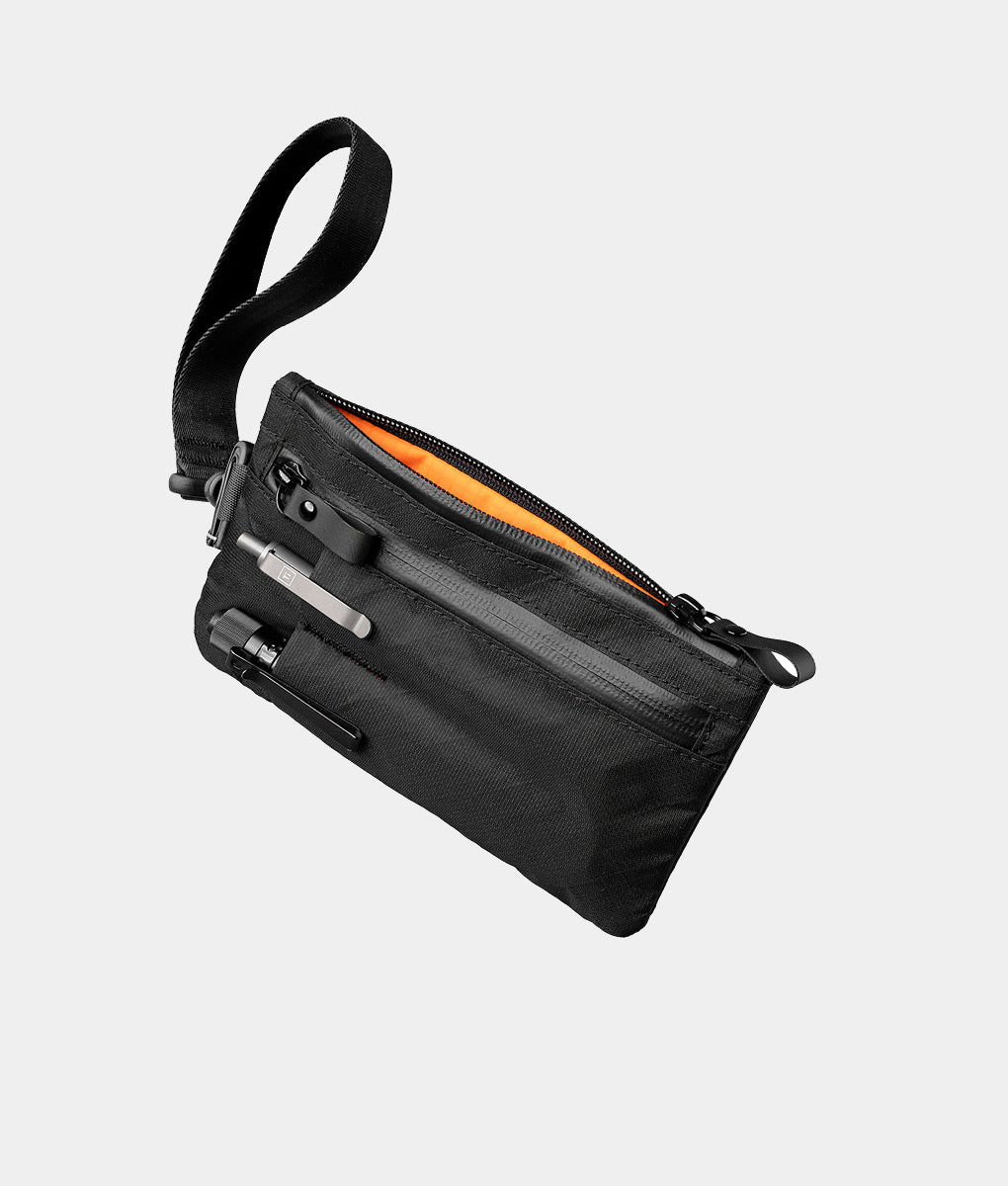
Then came the HUB ecosystem, a compatibility standard that connects bags, pouches, and accessories through a shared attachment interface. Buy a HUB-compatible accessory, and it works with any HUB-compatible bag.
Each mod, like the HUB Keychain, Cardholder, and Sunglasses Pouch, snaps onto any mount such as the HUB Clip, Carabiner, or Tactical Clip. That shift, from standalone products to an interconnected system, is the single biggest change in how ALPAKA designs.
For a closer look at HUB-compatible gear, explore the HUB ecosystem collection.

From Melbourne to 90+ Countries
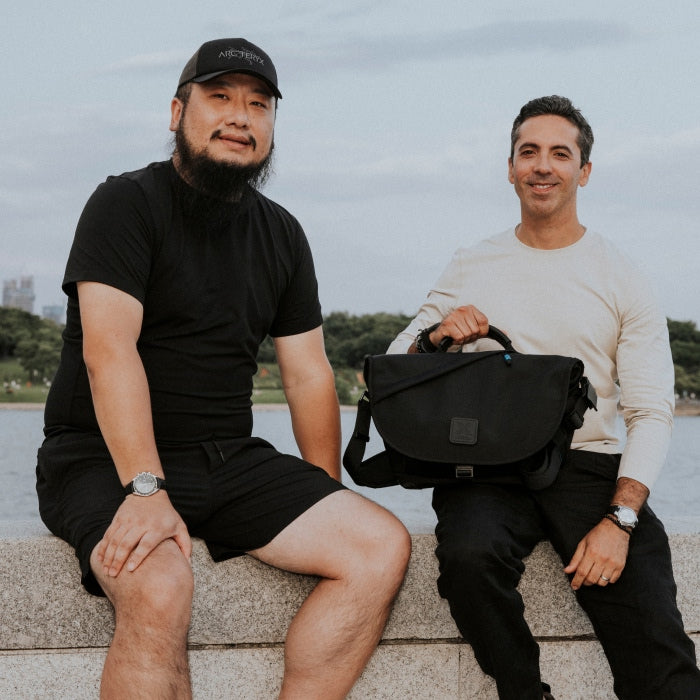
ALPAKA started in Melbourne with a two-person team and a Kickstarter page. Today, we have people across the US, Australia, Shenzhen, and Malaysia, and we ship to over 90 countries.
The community grew, so we did.
Every new city, climate, and commute pattern our gear shows up in teaches us something. That reach is the feedback loop from earlier in this post, working at a global scale, and it's why every generation of ALPAKA gear gets sharper than the last.

What Comes Next
The bags in Post 1 taught us how to design. The materials, hardware, and systems here taught us how to think about design as a connected philosophy.
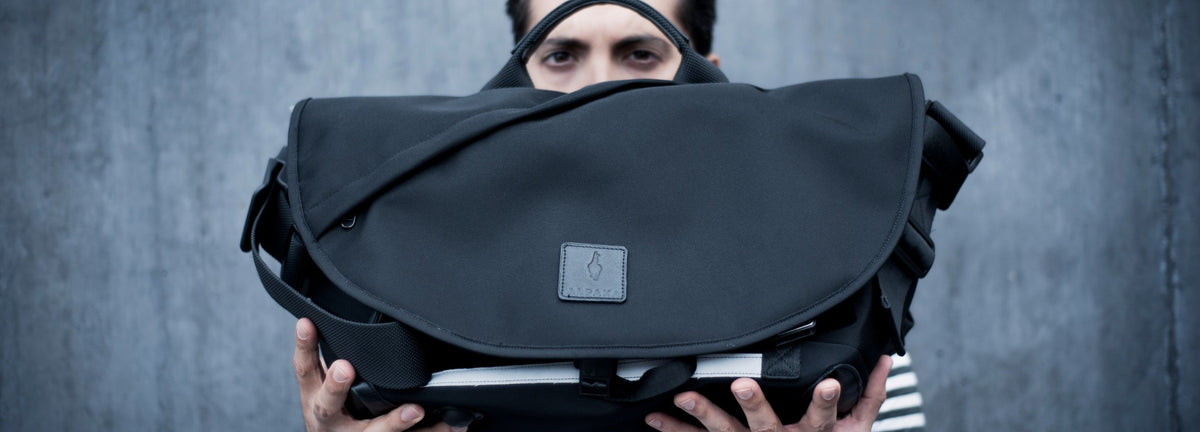
There is one more chapter. Ten years after the 7ven Messenger, we went back to where it all began.