

10 Years On: Behind The Design of Our Earliest Products
In 2016, we were a small team of two in Melbourne with a bag, a Kickstarter campaign, and a lot to prove.
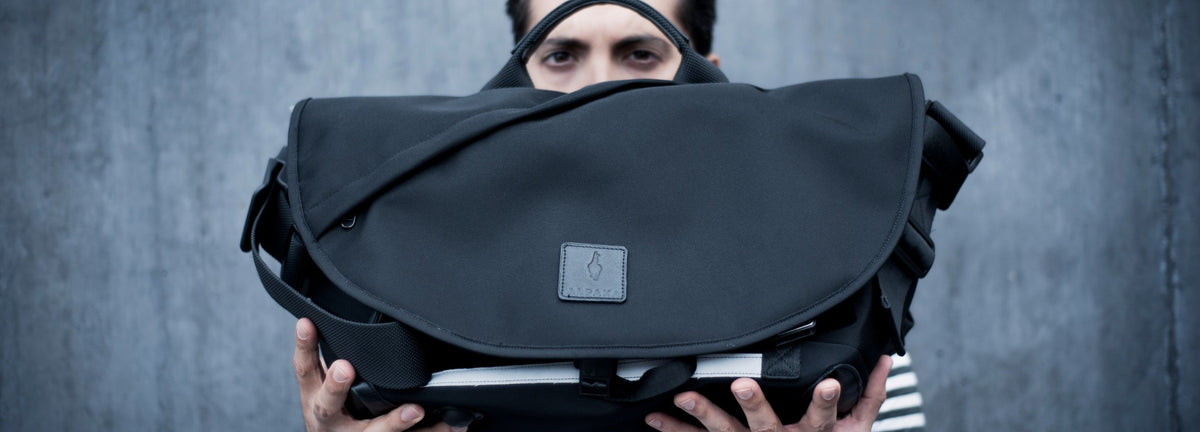
That bag was the 7ven Messenger. We launched it on Kickstarter in August 2016 with a simple idea: make one bag that could handle work, travel, and everyday carry without looking like technical gear. The campaign raised $93K from 462 backers who bet on a then-unknown brand.
That first campaign gave us more than a way to get the 7ven into production. It gave us a community willing to tell us what worked, what didn't, and what they wanted next.
For the next few years, we kept designing that way. Each new bag was another experiment. Each one gave us something to keep, something to rethink, and occasionally, something to leave behind.
Looking back at those early products, you can see the beginnings of the ALPAKA design approach: adaptable carry, purposeful organization, and protection built into the product rather than added as an afterthought.
These are some of the bags that taught us along the way.
7ven Messenger: Where It Started
The 7ven Messenger was our first attempt at answering a question that still drives us: can one bag do more?
It was designed as an everyday messenger, built to carry the essentials for work and everything that comes with the rest of the day.
The defining idea was versatility. Instead of designing around one particular use, we wanted a bag that could move between different parts of life without needing to be swapped out.
It was also our first real lesson in putting a product in front of a community and listening to what came back.

Shift Pack: Making One Bag Do More
The Shift Pack took that idea into backpack territory.
Launched through Kickstarter in 2017, it was built around an expandable rolltop design and a modular approach to everyday, travel, photography, and tech carry. Its capacity could expand from 20L to 35L, giving the same pack more room when the day demanded it.
The important lesson wasn't simply that a bag could carry more. It was that flexibility should be built into the design.
The Shift Pack was an early expression of something that would become central to ALPAKA: giving people ways to configure their carry around what they're actually doing.
It also taught us the other side of modularity. More options can quickly become more complex. The challenge isn't adding another feature. It's knowing when a feature genuinely makes the bag better.

Air Sling: Security That Doesn't Look Like It
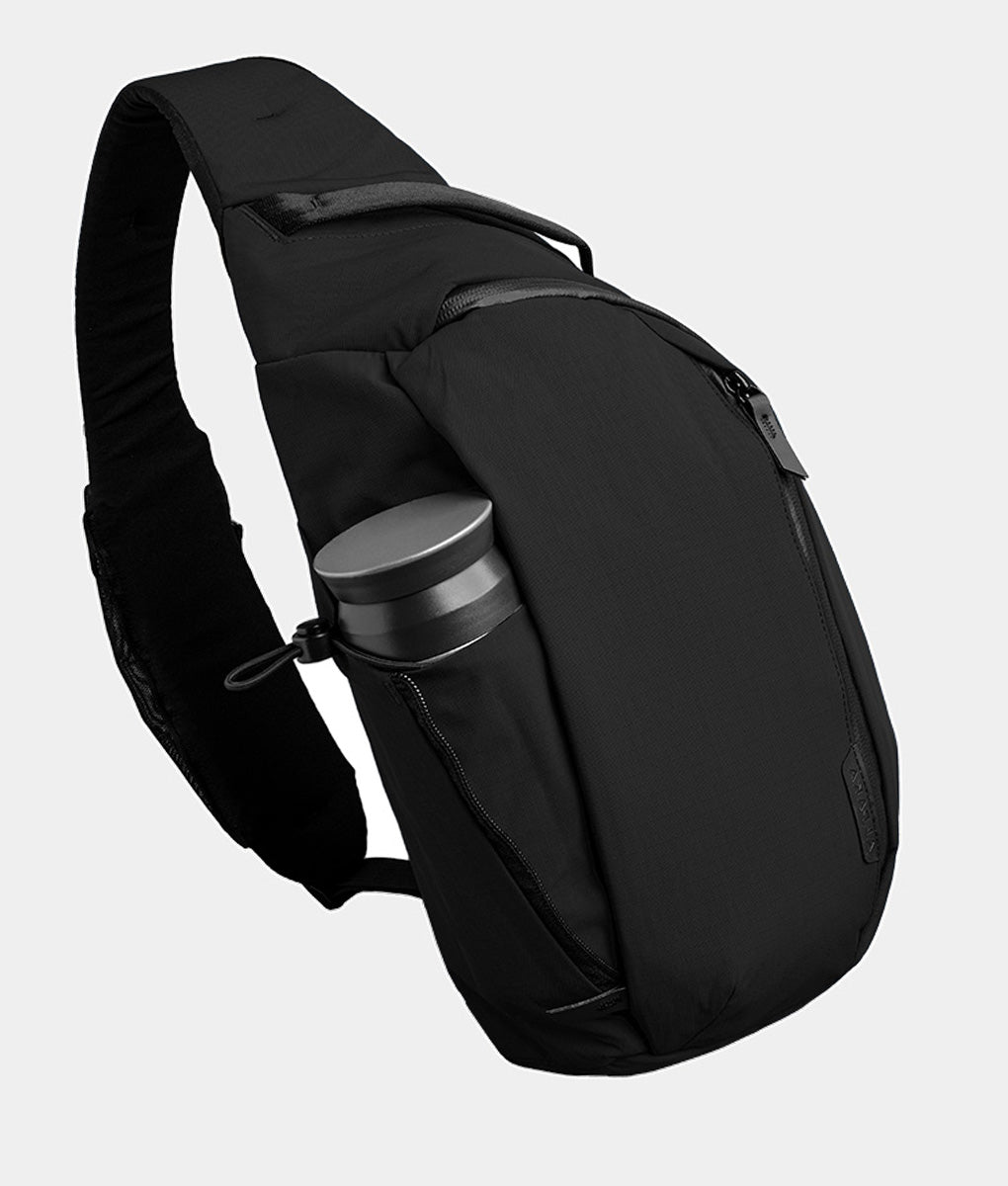
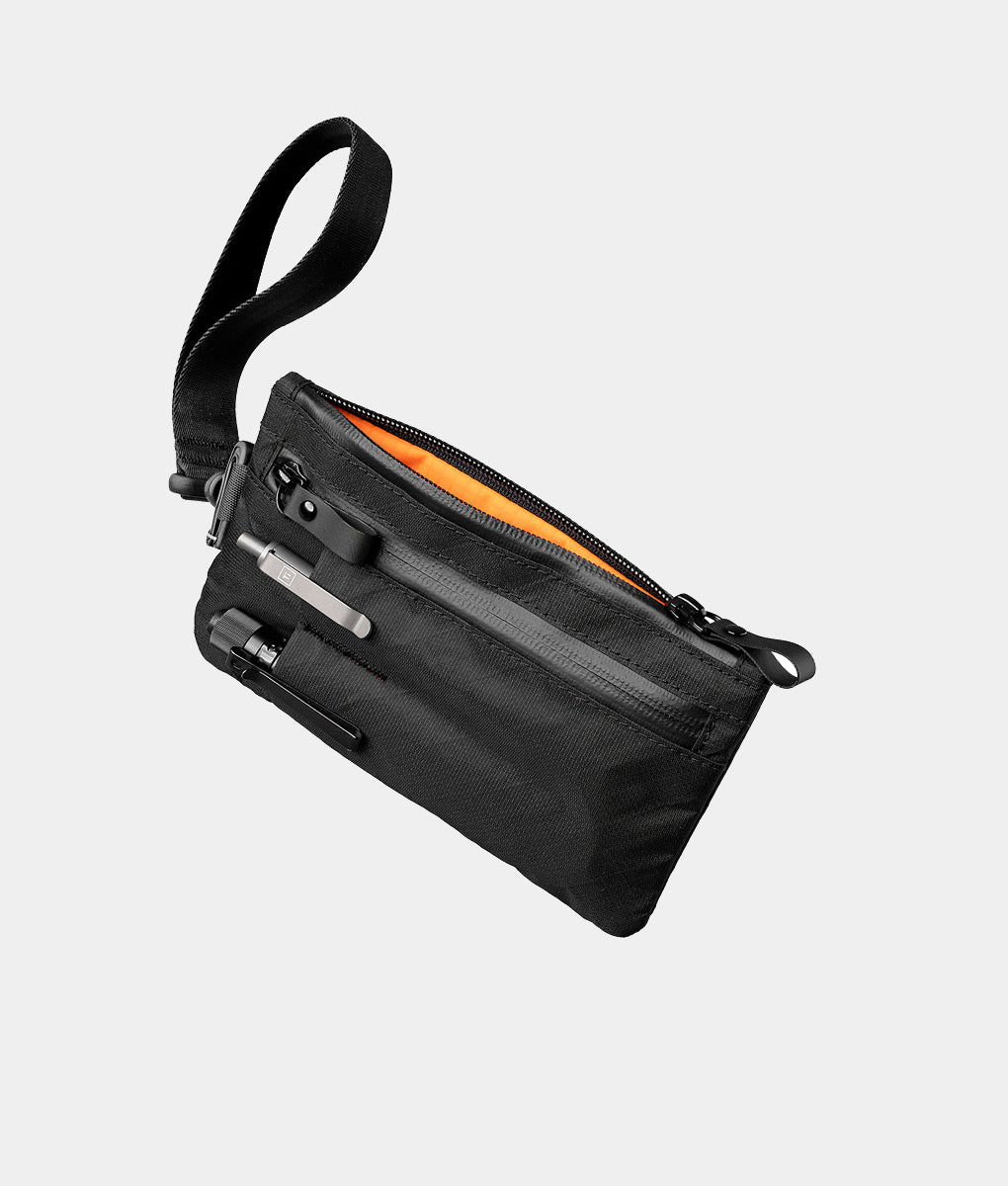
The Air Sling came from a different problem: how do you build more security into a small everyday carry without making it look like an anti-theft bag?
The answer was a compact sling with an external fabric so slash-resistant it needs to be laser-cut — plus German FIDLOCK hardware, lockable elements, and a weather-resistant build. The bag also incorporated an external USB charging port.
This was an important step in our approach to protection. Security didn't have to dominate the design. It could be integrated quietly into something clean enough to carry every day.
The Air Sling also marked an early chapter in our use of magnetic hardware. Today, that kind of hardware is a familiar part of ALPAKA carry, but the principle remains the same: small interactions matter. A closure should feel intuitive. Access should be quick. Protection shouldn't make the bag frustrating to use.

Go Sling Pro: More Than A Camera Bag
The Go Sling Pro tackled another familiar problem: carrying camera gear without having to carry a dedicated camera bag everywhere you go.
It was designed to convert between a travel sling and a camera bag, with removable dividers that could create a protected space for a DSLR and lens. A Kevlar cut-resistant layer, lockable zippers, and a cut-proof strap added protection, while an external USB port brought the tech-carry thinking of the era into the design.
The bigger lesson was inside the bag.
Protection and organization weren't accessories we expected people to add later. They were part of the product itself. The dividers could be configured around the camera gear you were carrying, then removed when you weren't carrying any.
It also reinforced something we'd started learning with the 7ven Messenger: more capacity isn't automatically better. A bag should give you enough room for what you need without encouraging you to carry everything you own.

Alpha Sling: Making Slings Big Enough to Matter
By 2019, we'd spent enough time around slings to see a gap.
Most compact slings were designed around the bare essentials. But what if you wanted to carry a tablet? A Nintendo Switch? A little more of your day?
The Alpha Sling pushed the format bigger without turning it into a backpack.
Its main compartment expanded from 6L to 8L, with enough room for an 11-inch tablet and larger everyday gear. The idea was simple: give people more capacity while keeping the form clean enough for daily carry.
That balance became one of the key lessons.
A bigger sling doesn't necessarily need to feel like a bigger bag.
The Alpha also gave us some useful, candid feedback. Reviews praised its size, organization, and expandability while calling out areas where craftsmanship could have been better. That kind of feedback is uncomfortable, but useful. Materials can be right. The concept can be right. And there can still be things we need to fix.
That's exactly why iteration matters.

Bravo X Sling: Protection, Taken Further
The Bravo X Sling brought several of those early ideas together.
It was a 6L sling designed around protection, organization, and everyday carry, with weather-resistant construction, lockable zippers, RFID protection, a Kevlar cut-resistant layer, and a fire-resistant layer designed to help protect against an internal lithium battery fire.
It also carried forward some of the era's more tech-focused features: an external USB charging port and a hidden SIM card holder.
In later V2 iterations, we refined the design further, adding waterproof zippers throughout, and a FIDLOCK magnetic key tether compatible with the HUB system.
That progression is worth paying attention to.
The first version didn't need to be the final answer. It gave us a platform to test, refine, and build on.
That's how our designs have always moved forward: one decision at a time.

The USB Port Era
There's one feature from this period that deserves its own mention: the USB port.
For a while, we built external charging ports into several bags, including the Air Sling, Go Sling Pro, and Bravo X Sling. At the time, it made sense. Put your power bank inside, route the cable through the bag, and charge your phone without opening the main compartment.
It was a good idea on paper, but in the real world, nobody wanted a cable permanently routed through their bag.
Over time, we moved away from the feature in newer designs. Some older models, including the Bravo X Sling and Bravo Sling Max, still carry it.
Sometimes you build something, put it through its paces, then learn that the better design is the one with less.

What These Bags Taught Us
Six products across four years. Each one started with a real problem and left us with a design lesson that carried into everything that followed.
The obsession was always the same: travel & everyday gear that keeps up with movement by solving the right problem and then getting out of the way.
The ambition was there from the start. The execution caught up product by product, with every round of community feedback tightening the gap between intention and craft.
That gap is what the next chapter is about.
One more thing. The 7ven Messenger turns ten this month, and we're not letting that pass quietly. September 22.